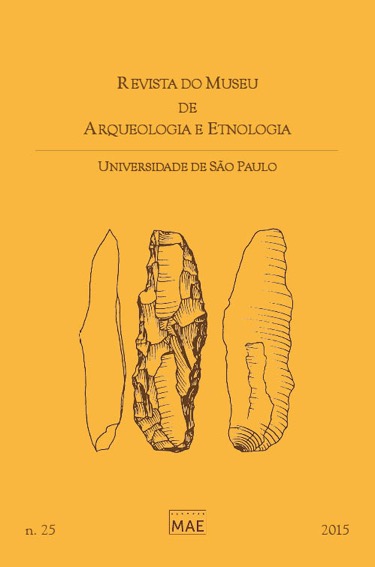
Archaeology in the tropical Forest: methodological contribution in the research area of FLONATA, Salobo, Pará
DOI:
https://doi.org/10.11606/issn.2448-1750.revmae.2015.114975Keywords:
Archaeology in tropical forest, southeast Pará, excavation methodology, natural levels, Archaeological dark earthAbstract
This paper presents the methodology used in the rescue archeological sites located in tropical forest area located in the state of Pará Southeast, city of Marabá. The systematic delineation through augerhole mesh with equidistant intervals between 10 m and 1 m, combined with excavations by natural levels in the central and peripheral areas of archaeological sites, allowed the observation continuity processes and discontinuity in the occupation of the settlements and the Earth formed Archaeological dark earth, here related to areas of activity within the villages. The methodology applied demonstrated the feasibility of systematic research in areas with dense vegetation, as well as critical analysis of their reach and limitations. The 22 archaeological sites surveyed provided information that helped in understanding the occupation history of this area, which began 6,000 years ago. This information includes data on the implementation of the sites in the landscape, functional typology of settlements (housing and camp) and occupancy timelines (inter - and intra - sites). This work will also contribute in building the knowledge of the local and regional prehistoric occupation.
Downloads
References
Downloads
Published
Issue
Section
License
Copyright (c) 2015 Maura Imazio da Silveira, Maria Christina Leal F. Rodrigues, Elisangela R. de Oliveira, Louis-Martin Losier

This work is licensed under a Creative Commons Attribution-NonCommercial-NoDerivatives 4.0 International License.