
Electoral trends in Araraquara: analysis of party representation in the legislative branch during 1964-2008
DOI:
https://doi.org/10.3232/REB.2015.V2.N3.07Keywords:
Electoral trends, redemocratization, political parties, municipal council, Araraquara (SP)Abstract
This article presents the first trends of electoral behavior in the city of Araraquara during the period 1964-2008. Based on analysis grounded in municipal election data, we show the features of local behavior which reflect the divisions between urban and rural contexts and their transformations. The analyses show that the socio-economic divide has barely changed the structure of political support for the leaders that emerged in this period. In other words, data analysis evidences that dissident parties of the extinct ARENA (PDS) have managed to maintain high rates of electoral support.
Downloads
Download data is not yet available.
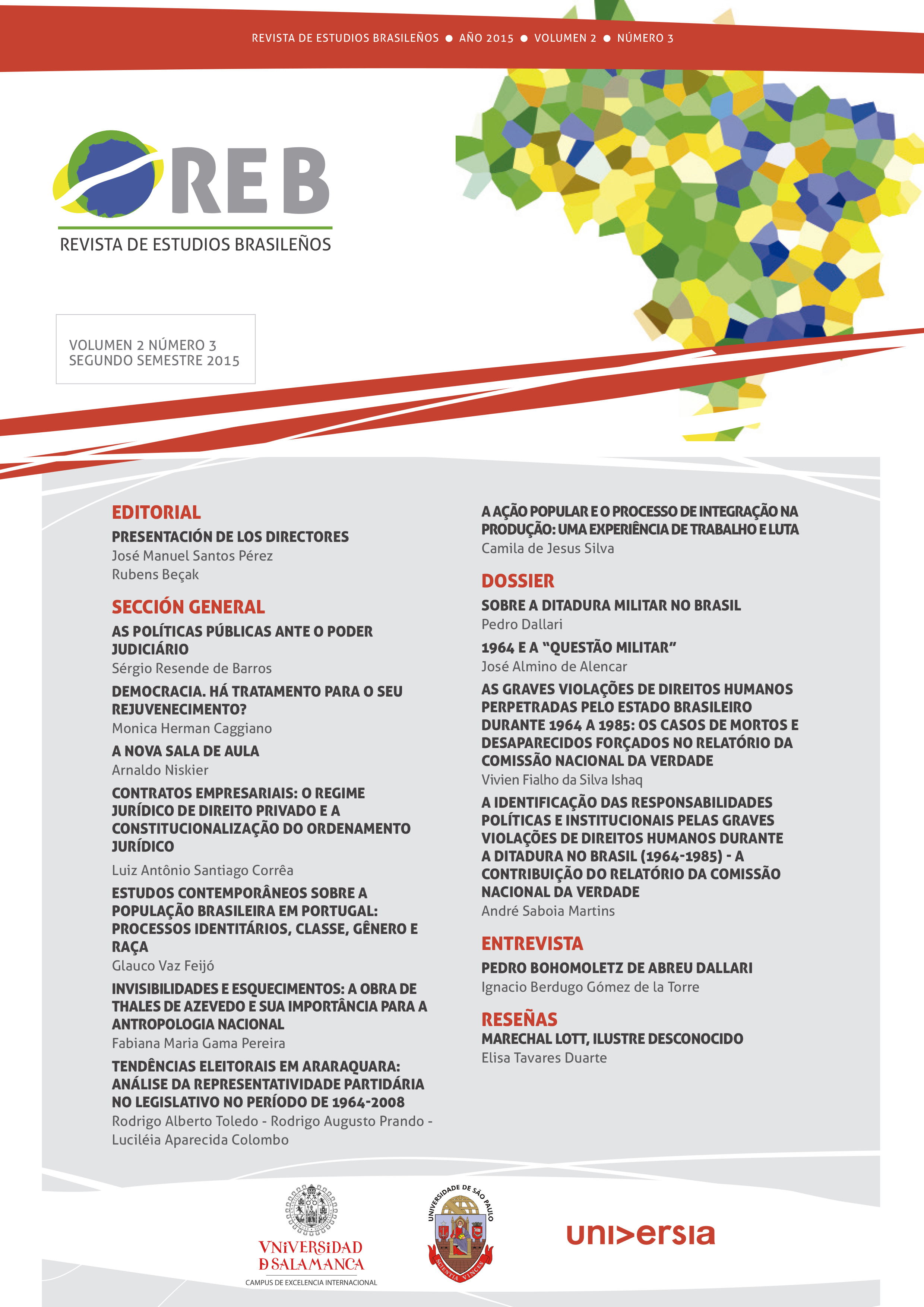
Downloads
Published
2015-07-28
Issue
Section
Articles
How to Cite
Electoral trends in Araraquara: analysis of party representation in the legislative branch during 1964-2008. (2015). Revista De Estudios Brasileños, 2(3). https://doi.org/10.3232/REB.2015.V2.N3.07


