Biosociability and Government Policies in High-Performance Sport
DOI:
https://doi.org/10.11606/2179-0892.ra.2017.141650Keywords:
Government, Biosociability, Sports, Athletes, CultureAbstract
Taking the Olympics to be held in Tokyo in 2020 as a starting point for problematizations about high-performance athletes government, I discuss the construction of bio-social communities as subjects of control strategies. Birth assumption that biotech today's conditions alter traditional notions of natural, cultural and artificial, and that these conditions are openings for emerging forms of social regulation, exemplified in this study in athletes and high performance sports. In conducting these discussions analyze the ways in which the World Anti-Doping Agency (WADA-AMA) prepares and performs management actions of the sporting vitality, primarily through the excerpts and statements present in the Play True magazine. It is considered that contemporary biotechnological able to change the human make up new forms of socialization, marked by an increase in vital capacity by changing the traditional understanding of body and nature, requiring new forms of government bodies.Downloads
Download data is not yet available.
Downloads
Published
2017-12-23
Issue
Section
Articles
License
Authors who intend to publish in this journal must agree with the following terms:
- a) Authors retain copyright and grant the journal the right of first publication. The work is simultaneously licensed under the Creative Commons Attribution License, which allows the work to be shared as long as the author and the initial publication in this journal are appropriately credited.
- b) Authors are authorized to sign additional contracts for non-exclusive distribution of the version of the work published in this journal (e.g., to publish it as a book chapter), as long as the author and the initial publication in this journal are appropriately credited.
- c) Authors are allowed and encouraged to publish and distribute their work online (e.g. on their personal webpage) after the editorial process, for this can generate productive changes as well as increase the impact and citation of the work. See The Effect of Open Access Publications.
How to Cite
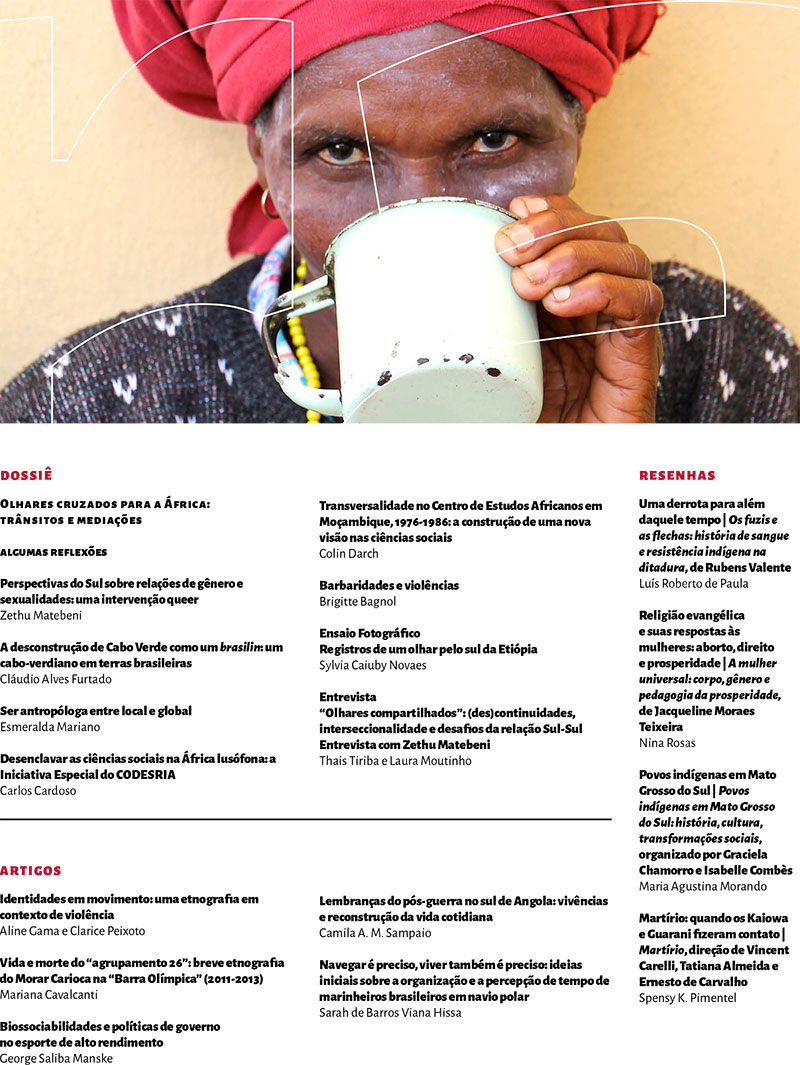
Manske, G. S. (2017). Biosociability and Government Policies in High-Performance Sport. Revista De Antropologia, 60(3), 236-256. https://doi.org/10.11606/2179-0892.ra.2017.141650