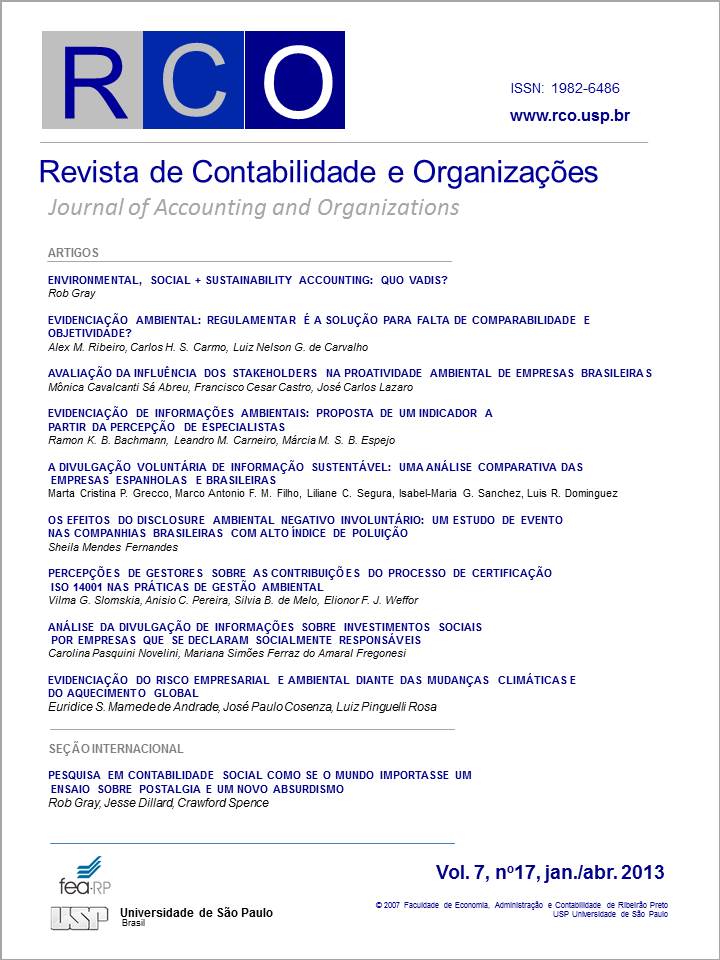
EVIDENCIAÇÃO DO RISCO EMPRESARIAL E AMBIENTAL DIANTE DAS MUDANÇAS CLIMÁTICAS E DO AQUECIMENTO GLOBAL
DOI:
https://doi.org/10.11606/rco.v7i17.56691Palavras-chave:
Environmental disclosure, Hydroelectric generation, Climate changes, Corporate risks, Environmental vulnerability.Resumo
Este artigo tem como objetivo identificar evidências econômicas e ambientais em relação ao risco estratégico, por causa dos problemas das mudanças climáticas globais. Para isso realizou-se uma pesquisa descritiva-exploratória, conduzida através de um estudo de caso, visando delimitar as variáveis observadas, a área geográfica e o resultado de suas possíveis interações com o contexto de uma grande empresa da indústria de energia hidrelétrica brasileira. Para caracterizar a importância da adaptação de seu planejamento estratégico diante dos possíveis impactos das mudanças climáticas globais, empregou-se o Painel de Especialistas, o Método Delphi e a Matriz SWOT como técnicas de pesquisa. A utilização conjunta dessas três metodologias possibilitou um maior refinamento da pesquisa, com a construção de cenários de longo prazo que puderam ser inferidos em relação às questões pertinentes ao estudo. Os resultados obtidos mostram que a diminuição da vazão de água e a redução do nível dos reservatórios, devido às alterações climáticas, representam os principais riscos ambientais estratégicos da empresa estudada, podendo ameaçar sua competitividade empresarial e comprometer negativamente seu desempenho operacional, econômico e social até o ano de 2050.
Downloads
Downloads
Publicado
Edição
Seção
Licença
A RCO adota a política de Acesso Livre (Libre Open Access), sob o acordo padrão Creative Commons (CC BY-NC-ND 4.0). O acordo prevê que:
- A submissão de texto autoriza sua publicação e implica compromisso de que o mesmo material não esteja sendo submetido a outro periódico. O original é considerado definitivo;
- Autores mantêm os direitos autorais e concedem à revista o direito de primeira publicação, com o trabalho simultaneamente licenciado sob a Licença Creative Commons Attributionque permite o compartilhamento do trabalho com reconhecimento da autoria e publicação inicial nesta revista;
- Autores têm autorização para assumir contratos adicionais separadamente, para distribuição não-exclusiva da versão do trabalho publicada nesta revista (ex.: publicar em repositório institucional ou como capítulo de livro), com necessário reconhecimento de autoria e publicação inicial nesta revista;
- Autores têm permissão e são estimulados a publicar e distribuir seu trabalho online (ex.: em repositórios institucionais ou na sua página pessoal) antes ou durante o processo editorial, já que isso pode gerar alterações produtivas, bem como aumentar o impacto e a citação do trabalho publicado (Veja O Efeito do Acesso Livre);
- A revista não paga direitos autorais aos autores dos textos publicados;
- O detentor dos direitos autorais da revista, exceto os já acordados no acordo de Libre Open Access (CC BY-NC-ND 4.0), é o Departamento de Contabilidade da Faculdade de Economia, Administração e Contabilidade de Ribeirão Preto da Universidade de São Paulo.
Não são cobradas taxas de submissão ou de publicação.
São aceitos até 4 autores por artigo. Casos excepcionais devidamente justificados poderão ser analisados pelo Comitê Executivo da RCO. São considerados casos excepcionais: projetos multi-institucionais; manuscritos resultantes da colaboração de grupos de pesquisa; ou que envolvam grandes equipes para coleta de evidências, construção de dados primários e experimentos comparados.
É recomendada a ordem de autoria por contribuição, de cada um dos indivíduos listados como autores, especialmente no desenho e planejamento do projeto de pesquisa, na obtenção ou análise e interpretação de dados e redação. Os autores devem declarar as efetivas contribuições de cada autor, preenchendo a carta ao editor, logo no início da submissão, responsabilizando-se pelas informações dadas.
É permitida a troca de autores durante todo o processo de avaliação e, antes da publicação do manuscrito. Os autores devem indicar a composição e ordem final de autoria no documento assinado por todos os envolvidos no aceite para publicação. Caso a composição e ordem de autoria seja diferente da informada anteriormente no sistema, todos autores anteriormente listados deverão se manifestar favoráveis.
No caso de identificação de autoria sem mérito ou contribuição (ghost, guest or gift authorship), a RCO segue o procedimento recomendado pela COPE.